Analog circuit kit

I was browsing the web the other day and I came across this project by Nick Ames. It is an electronics lab within an Altoids tin and how cool is that? I really like small, portable, and above all electronics projects and this seems like just an absolutely lovely way to teach people about analog circuits. In the comments, someone was asking if he could provide a tutorial to use the items in the kit, however, there was no reply. I think this would be a pretty cool project to work on and items can be incrementally added as the project grows. ...
December 7, 2016 · 3 min

Acer C720 is my favourite computer

I spend a lot of time with my computer, and it goes with me wherever I go. After having the privilege of testing out a number of different computers, I have come down to a few considerations: Battery Life Weight Ability to run Linux Cost I found it especially annoying to carry about a power brick to power my laptop, and having to find outlets all the time. This limits the places where I can work and gives additional, unwanted stress of seeing how low the power is all the time. ...

November 28, 2016 · 5 min

Getting Dropbox to work (Linux permissions error)

Sometimes you might face a permissions error and reinstalling and uninstalling dropbox doesn’t work. This even happens when you use sudo to run the dropbox daemon. It starts installing, unpacking, and then… nothing. You don’t even get a prompt to link your account to Dropbox. Launching from the command line results in an error. Well, if you are using Thundar or any other file manager, this might be because Dropbox is dependent on Nautilus to run. I am running crouton on a chromebook and this was tried on xenial and jessie distributions. ...

November 27, 2016 · 1 min

Create a WebServer (10)

With the ESP8266 it was hinted earlier that it can host a web page, and this guide serves as a quick breakdown of how to create a server that serves up webpage. This can also be found as a sketch under Examples. This tutorial assumes that you have some knowledge of HTML. We start by including libraries: #include <ESP8266WiFi.h> #include <WiFiClient.h> #include <ESP8266WebServer.h> #include <ESP8266mDNS.h> Two of these might be familiar to you, the other two might not be. ESP8266WebServer.h is a library that helps us to set up a web server on our ESP8266 module. ESP8266mDNS.h is a library that allows us to receive and manage DNS requests. Now we create an object for DNS, and write in the credentials for our network: ...

November 20, 2016 · 2 min

OLED, I2C (9)

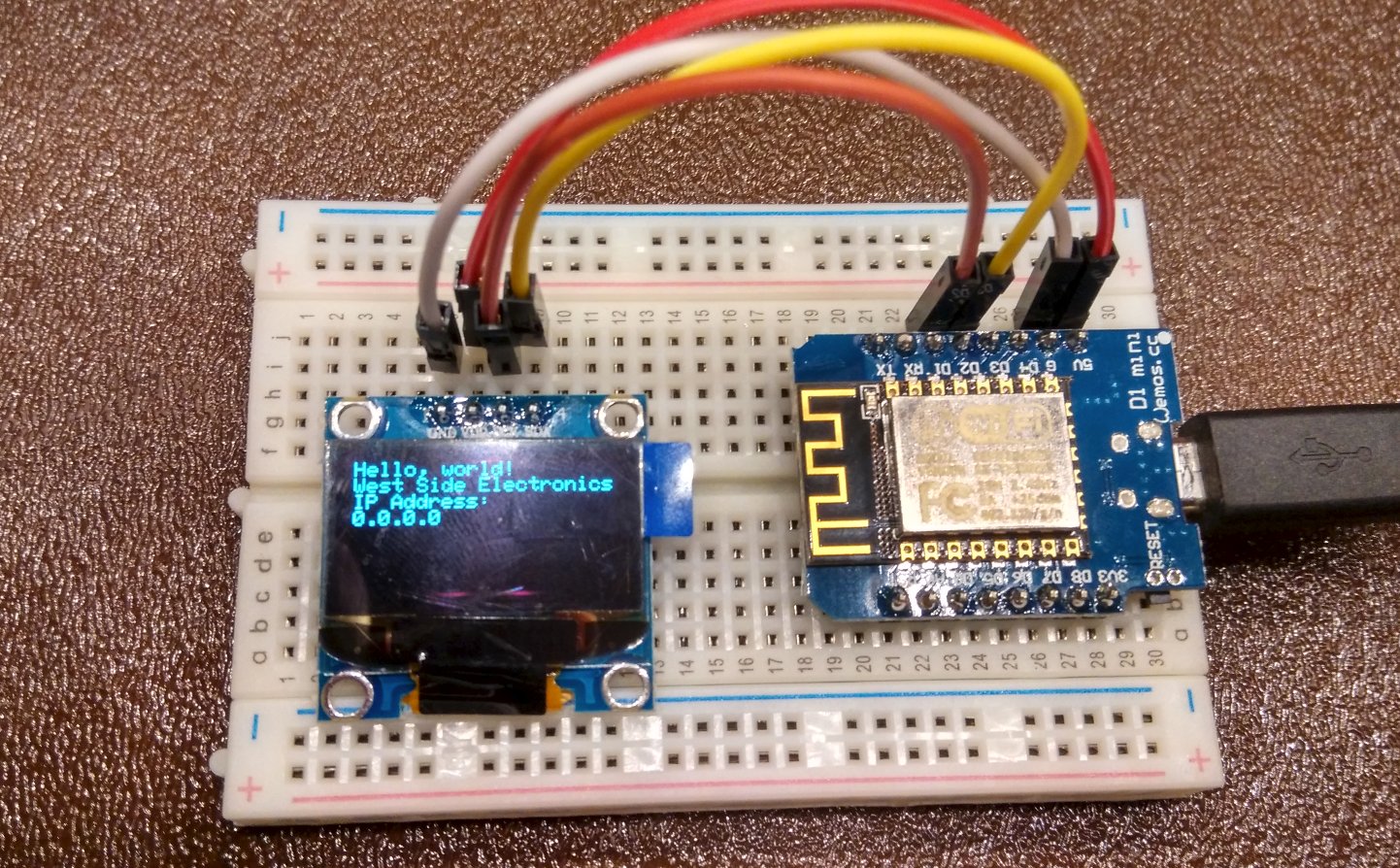
Inter-integrated Circuit (I2C) is a communication protocol that is used to connect many embedded devices. In our case, we are going to use it to connect an Organic LED (OLED), a tiny screen for more display goodness. Assuming that you ordered your chip from someplace else (Aliexpress/Ebay), you might not be able to find documentation for this module. Alongside serving as a tutorial for the ULCK kit, this also serves as a guide to getting most OLED modules to work with other platforms. ...

November 19, 2016 · 2 min

Fun with Addressable LEDs (8)

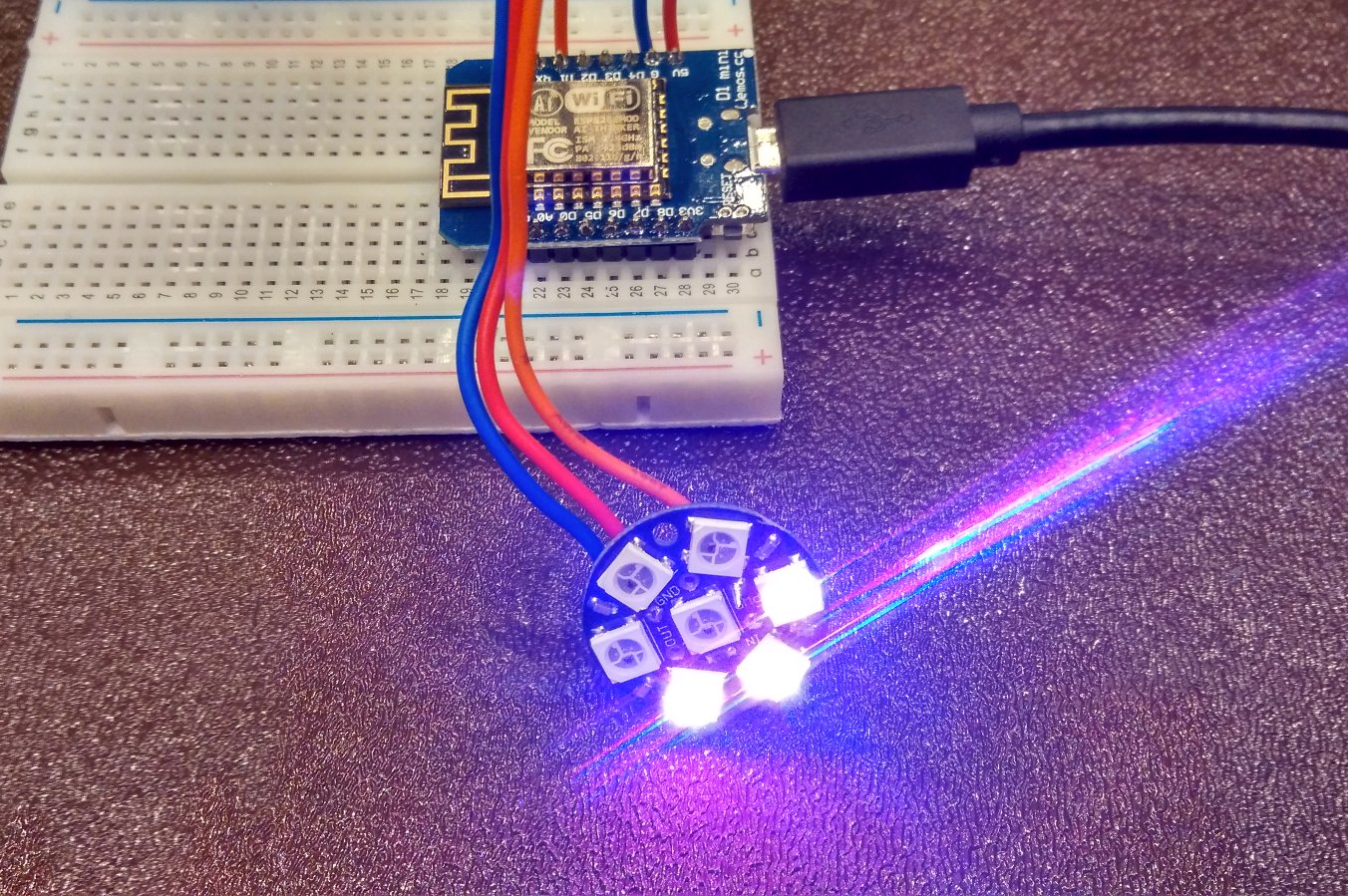
This tutorial can only be done with the Lighting Add-On pack. The another great thing about the 5050 LED chip is that when you chain them up (yes you can chain them up!), you can address each of them using the same data line. This means that if we connected say 4 LEDs in a row, I’d be able to say “Hey Third LED, turn yellow.” This works the same for 2, 10 or 200 LEDs. So instead of having all your LEDs change the same color, you can have chasing lights, displays…etc all within the same data line (after taking into account the current a large number of LEDs need!). ...

November 19, 2016 · 2 min

Uploading without wires (7)

This tutorial is only for the ESP8266 chip. If you have a ESP8266 chip, we have merely used 5% of this chip’s total capabilities. The ESP8266 chip can both connect to Access Points (AP) and also set up a soft AP, which cleans that it can serve as both a client and router. On this router we can serve up webpages to control what we want the chip to do. One very useful method to interface with your chip over wifi is Over The Air (OTA) updates. ...

November 19, 2016 · 3 min

Trimpot and Switches (6)

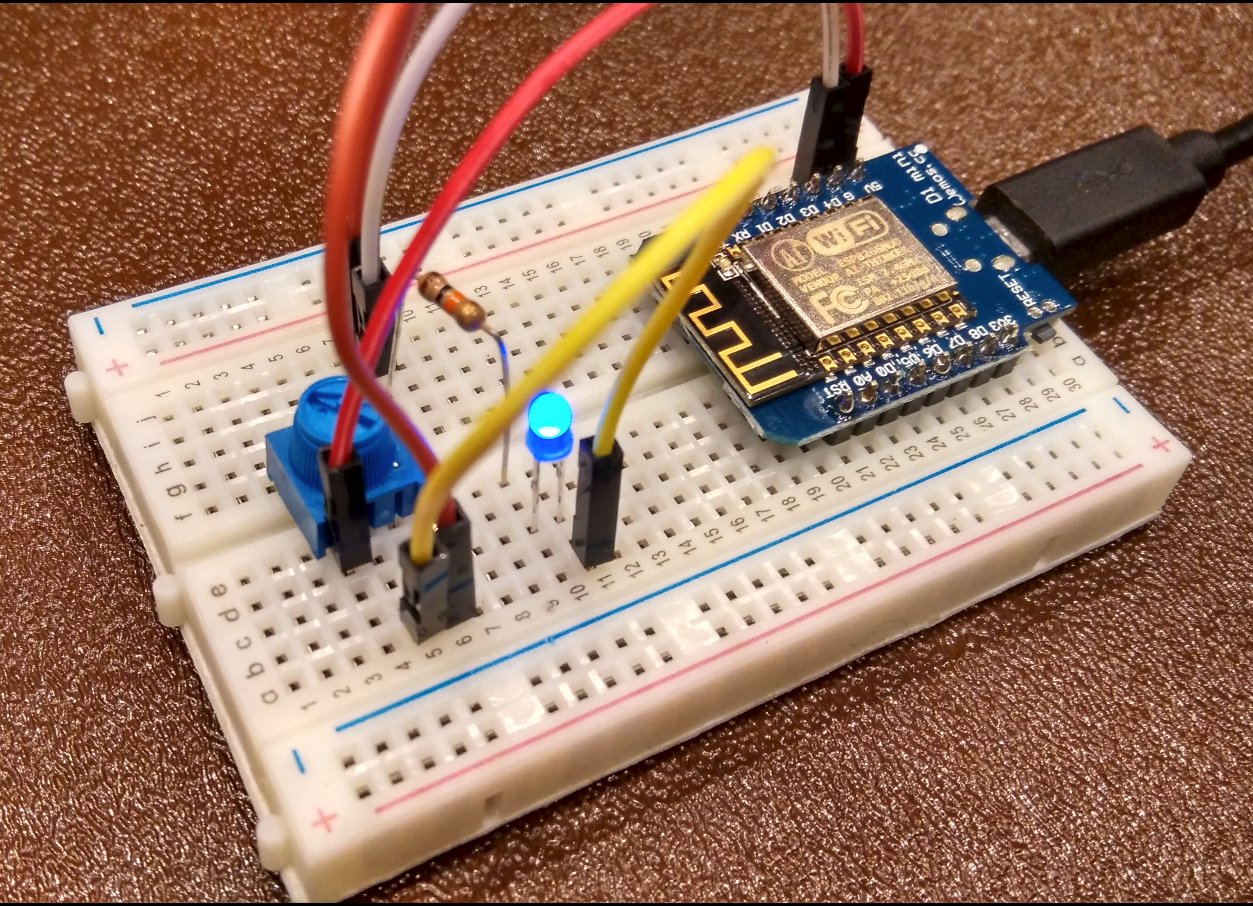
A trimpot is basically a resistor that you can vary the resistance of. This is useful for controlling output in an analog manner. The push switches only turn on for the length of time they are pressed. The switches are connected across adjacent legs, which is laid out in the wiring diagram below. Figure 1. Wiring schematic for Button A switch is useful for sending a single HIGH or LOW pulse to a pin. To ensure that the pin is always at HIGH or LOW (so that our pulse can be detected), we want to use a pull down or pull up resistor such that when the switch is released, the pin is at HIGH or LOW. ...

November 18, 2016 · 2 min

One Wire Protocols (5)

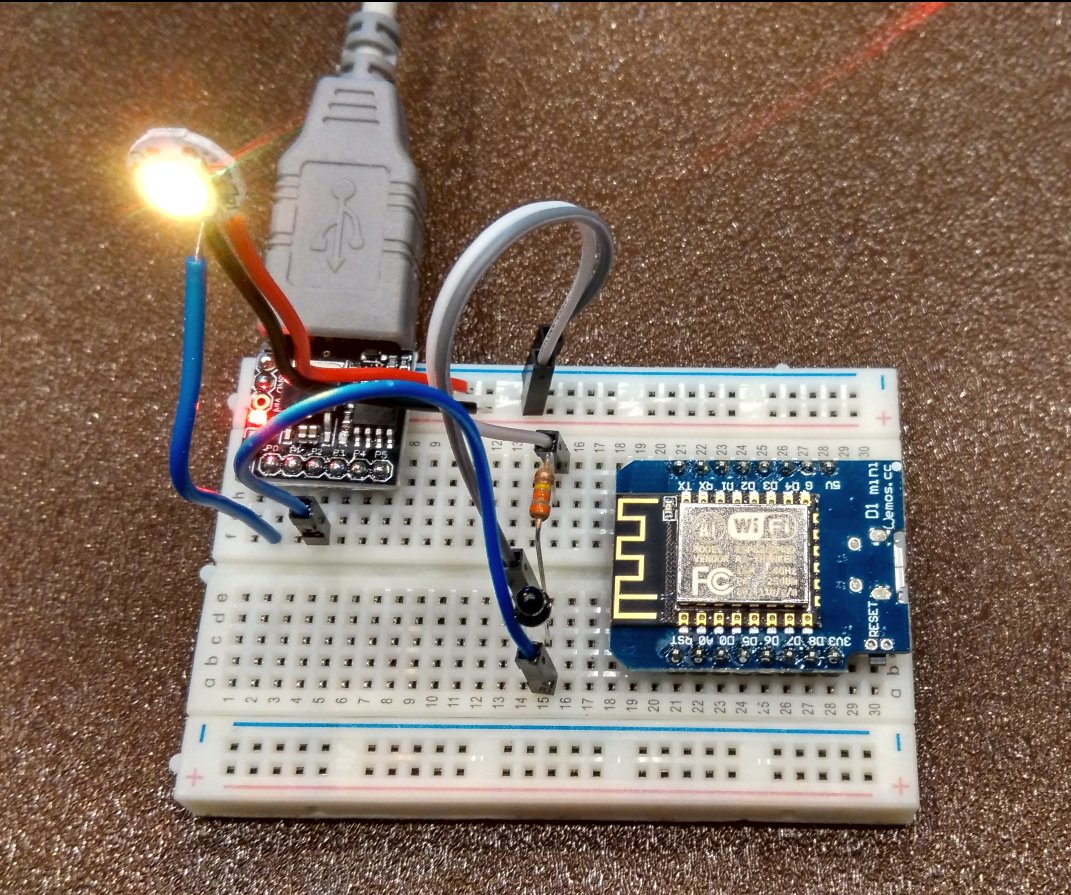
In your package you might have a tiny white chip with three wires sticking out of it. This is a 5050 LED IC. What this chip does is that it combines three small but bright LEDs into a neat little package and by using some clever signalling, these LEDs can be made to shine at any level of brightness you desire and generating any color you want within the spectrum. ...

November 15, 2016 · 4 min

Ping Pong Light Diffuser & other LED Improvements

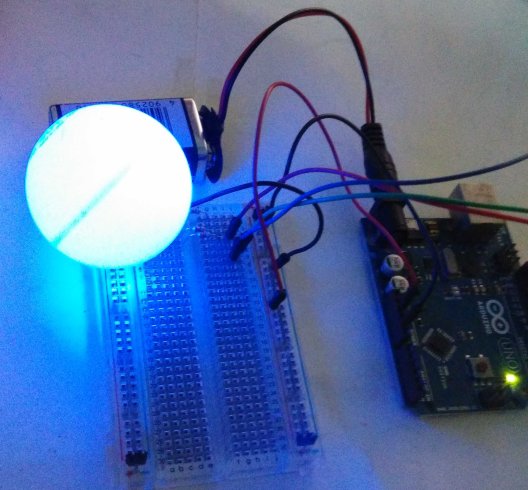
You use LEDs everywhere, here are some ways to make them better. Ping Pong Light Diffuser Sometimes you got a really bright LED that you want to diffuse. A simple way to do this would be to take a white ping-pong ball, preferably dented, and using a small screwdriver, punch a whole through the dent. You want to make the hole big enough such that you can fit in the LED, but small enough such that it rests on the lip of the LED. You can then secure the LED in place with tape or tack. For a more permanent solution you can also hot-glue the ping pong ball in place. ...

November 15, 2016 · 1 min